Tool sprawl was costing the business focus.
MBRDI employees were managing 12+ internal platforms across approvals, communications, knowledge bases, and operations. Daily productivity was bottlenecked by context-switching, not by the work itself.
Fragmented daily workflows.
- Multiple platforms required for routine tasks
- Time-critical updates buried under irrelevant notifications
- No clear prioritization of pending actions
- Difficulty locating internal subject-matter experts
Mobile workflows underserved.
- Enterprise tools built desktop-first, mobile an afterthought
- Limited access for field, hybrid, and remote employees
- No glanceable summary of role-relevant information
- No personalization: every user saw the same content stream
Twelve platforms. Twelve places to look. No single source of truth.
Routine tasks meant jumping across approvals, comms, knowledge bases, and operations tools: a tax paid every single day before any real work began.
A unified mobile entry point that integrates with existing enterprise systems,
surfacing only role-relevant information per user.
Grounding the brief in evidence.
Mixed-methods research across functions and seniority levels. The objective: validate the problem space, identify priority workflows, and de-risk early design decisions before committing engineering resources.
Semi-structured interviews and contextual inquiries with employees across engineering, design, operations, and leadership. The sample spanned in-office, hybrid, and field-based working modes to capture variance in access patterns.
Competitive analysis of enterprise platforms with similar consolidation goals. Audits of internal tooling and review of analytics from existing platforms to quantify usage patterns and drop-off points.
I check five or six tools every morning to know what's relevant for the day. Most of what I see doesn't apply to my work.
The core flow, end to end.
A walkthrough of the shipped app, from the personalized home into the everyday tasks employees reach for most, screen-recorded from the build.
Prioritizing for impact.
An impact-vs-effort framework defined the MVP scope. Features were ranked by user value, technical feasibility, and strategic alignment with MBRDI's existing platform ecosystem.
Reduce time spent searching for information
Surface only role-relevant content
Enable quick actions and status checks
Support communication and accessibility standards
Maintain simplicity at scale
Integrate with existing platforms, not replace them
From IA to shipped product.
Low-fidelity flows were validated with employees in moderated sessions, then progressively integrated with the Mercedes-Benz visual language. Accessibility was scoped as a launch requirement from project kickoff.
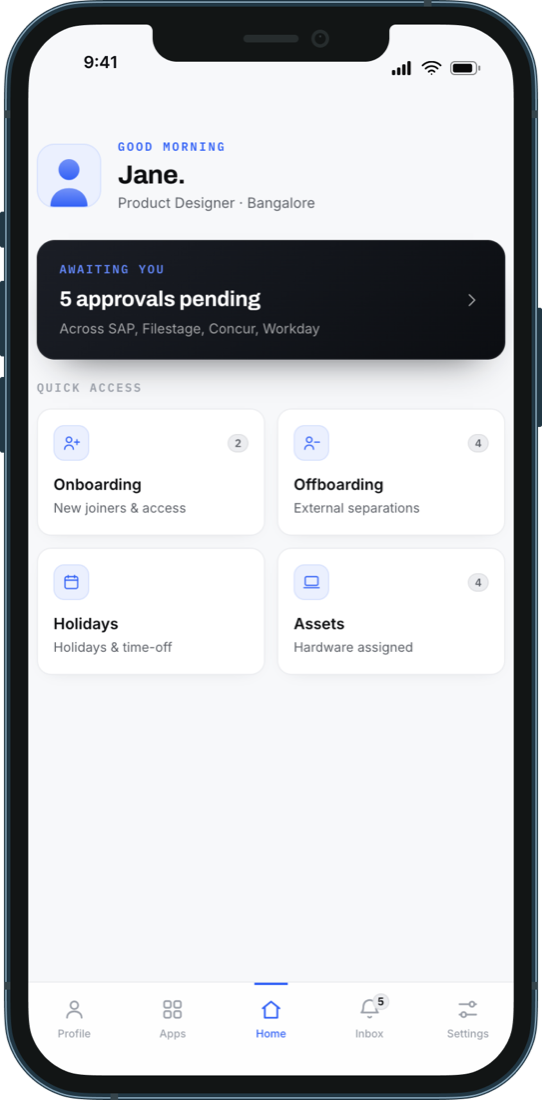
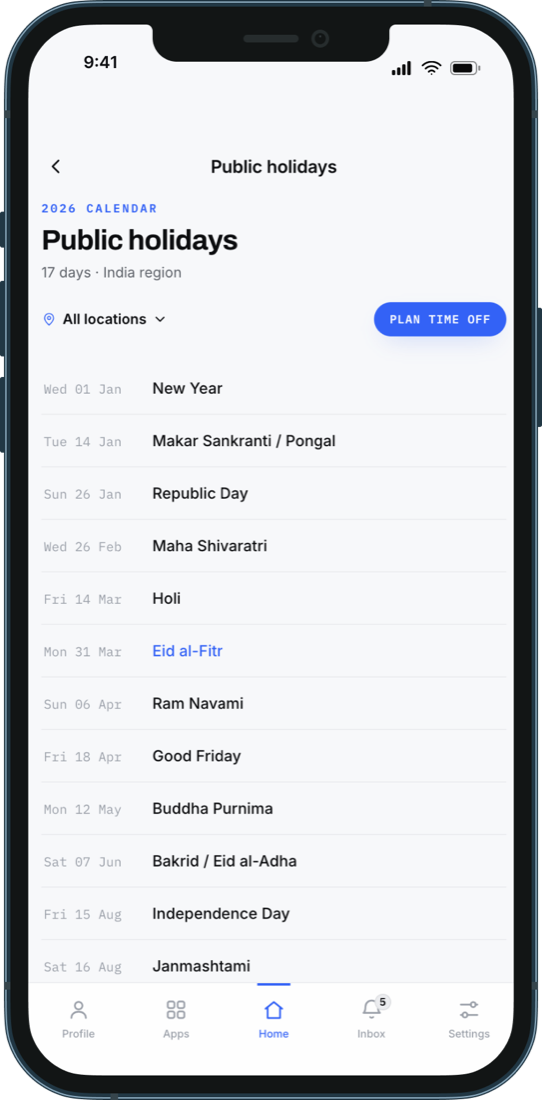
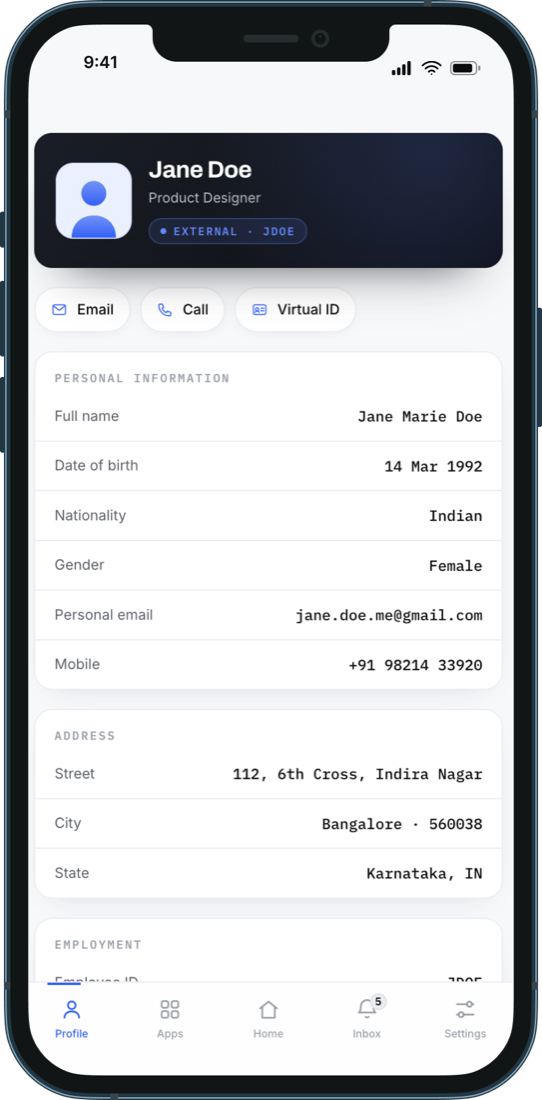
Deployed across MBRDI.
One MB launched as the daily entry point for R&D employees, with measurable improvements in engagement and platform consolidation within the first quarter of release.
Reflections on building for enterprise scale.
Surfacing only content relevant to a user's team and function was the single largest contributor to the engagement lift. The personalization layer reduced cognitive load and made the app feel built for the individual, not the company.
Designing for constrained screen real estate first required ruthless prioritization. Every feature had to justify its place in the MVP, which produced a tighter product and a clearer roadmap for later releases.
One MB sat on top of existing platforms rather than replacing them, which required coordinated dependency management across multiple platform teams: each with separate APIs, release cycles, and stakeholder approvals. Specs had to accommodate constraints we couldn't always change.
WCAG 2.1 was a launch requirement, but some components surfaced accessibility issues late in development. We adjusted process to integrate accessibility audits into early design reviews on subsequent projects.
The pressure in enterprise environments is always to add: more dashboards, more controls, more visibility. One MB reinforced the opposite: value came from deciding what not to surface. Effective personalization logic and disciplined IA mattered far more than feature breadth.
The personalization architecture. The mobile-first scoping discipline. And the strategic decision to layer One MB on top of existing systems rather than replace them. Adoption depended on it.
Accessibility audits embedded in early design reviews, not at QA. Broader research across field and remote employees, not concentrated on office-based users. A measurement framework defined at kickoff to attribute engagement lift to specific features.